
Trust Is the New Traffic: Five Ways Aesthetic Clinics Can Go Further With Patient Proof
Most clinic owners we meet are watching the wrong number. They track traffic, enquiries and follower counts, and when the diary has gaps they spend more on being seen. By the time someone fills in your contact form, though, a good part of the decision has already been made, and you were not in the room.
Before a prospective client calls, they have usually asked an AI assistant who to trust, read your Google reviews from the bottom up, scrolled your Instagram to see whether the clinic looks lived in, studied your before and after gallery, and looked up who would actually be holding the syringe. Each is a checkpoint, and failing one drops you off the shortlist without a sound. You will never see the visit that did not turn into an enquiry.
Traffic gets people to the first checkpoint, and trust is what gets you through all five.
Most clinics already have the familiar signals in place: a star rating, a short gallery, a headshot with a few letters after a name, and a social bio that mentions aesthetics. Prospects now linger longer, and they look for more. They want full, dated reviews, patient stories that explain the result, practitioner pages that introduce a real person, and a profile that states exactly what the clinic specialises in.
This article walks through each checkpoint, with examples of clinics that have expanded those elements, and practical tips you can take back to your own site.
Why visible credibility matters more now
On 21 October 2026 the UK government launched a consultation on restricting high-risk cosmetic and wellbeing procedures in England. Under the proposals, treatments such as deep chemical peels, vampire facials, dermal micro-coring and some laser procedures could only be carried out by doctors, dentists and independent prescribing nurses, midwives or pharmacists. The Care Quality Commission would enforce the rules, and breaching them would be a criminal offence. The consultation is open until 13 January 2027.
Separately, the government says it remains committed to a licensing scheme for clinics offering botulinum toxin, lip filler and other lower-risk treatments. The press release describes the aim as helping people to identify safe, qualified providers they can trust.
These are proposals, and the final rules may change. The direction of travel is clear enough to act on, though. Public attention on who is qualified to treat whom is rising, and prospective clients will start checking before they book. Showing your registrations, qualifications and regulator in plain sight is the right place to start. The checkpoints below look at how to give patient feedback, results and the people behind the clinic more space, so a prospect can check them properly.
The five trust checkpoints
Checkpoint 1: the AI assistant
People now put questions to ChatGPT, Gemini and Google's AI Overviews that used to go to a friend.
Which clinic in Mayfair does subtle filler? Is this place safe?
An AI assistant can only repeat what it can find, and in our experience it leans on facts that match across many places:
- your website
- your directory listings
- your press coverage and,
- your reviews.
If your practitioner names and treatments differ from one source to the next, or nobody independent has written about you, it has very little to say. We covered the technical side in our article on AI search.
This is the brand side.
Ouronyx is a great example.
It is a doctor-led facial aesthetics clinic on St James's Street in London, with a second site in Dubai. Its own website explains the proposition in plain language: it works on the face and hair only, uses 3D imaging to assess skin and scalp health, and has its doctors recommend a plan from that data. Independent voices then repeat the same story.
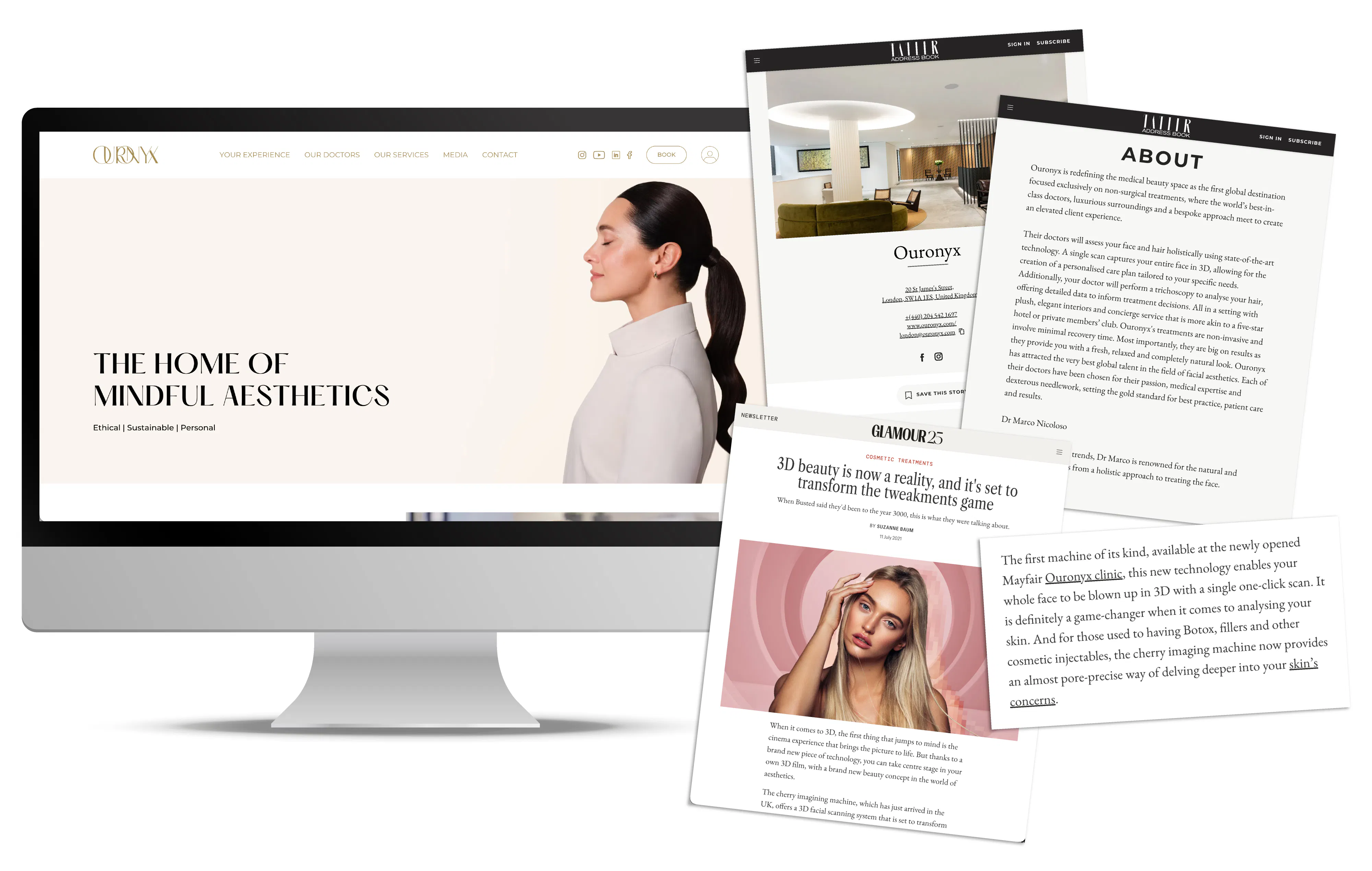
Tatler carries a profile of the clinic in its address book, and Glamour UK has run a feature on the 3D face scanner in which clinical director Dr Marco Nicoloso talks the writer through the scan. An AI assistant asked about Ouronyx finds the same account in the clinic's words and in other people's.
For clinic owners: Start with the one sentence you want repeated about your clinic, then check that your website, your directory profiles and your press all say it. Third-party mentions give an assistant something reliable to draw on, and they give a prospect a reason to believe you.
Checkpoint 2: Reviews and real stories
A high star rating makes many clinics feel their reviews are sorted.
Prospects look at more than the number.
They notice how recent the reviews are, whether practitioners and treatments are named, and how you reply when something went wrong. A long run of five stars with no replies and no detail can look as thin as having no reviews at all.
NEU Clinic, the doctor-led cosmetic clinic in Chelsea and Marylebone, gives its reviews a page of their own. The page opens with 5.0 from 573 Google reviews and 5.0 from 245 Fresha reviews, and says the feed is updated daily. Visitors can switch between the two platforms and read each review in full. Many name the doctor and the treatment, such as masseter Botox, cheek filler or a non-surgical facelift, so a prospect with a specific concern can find someone who had the same one.
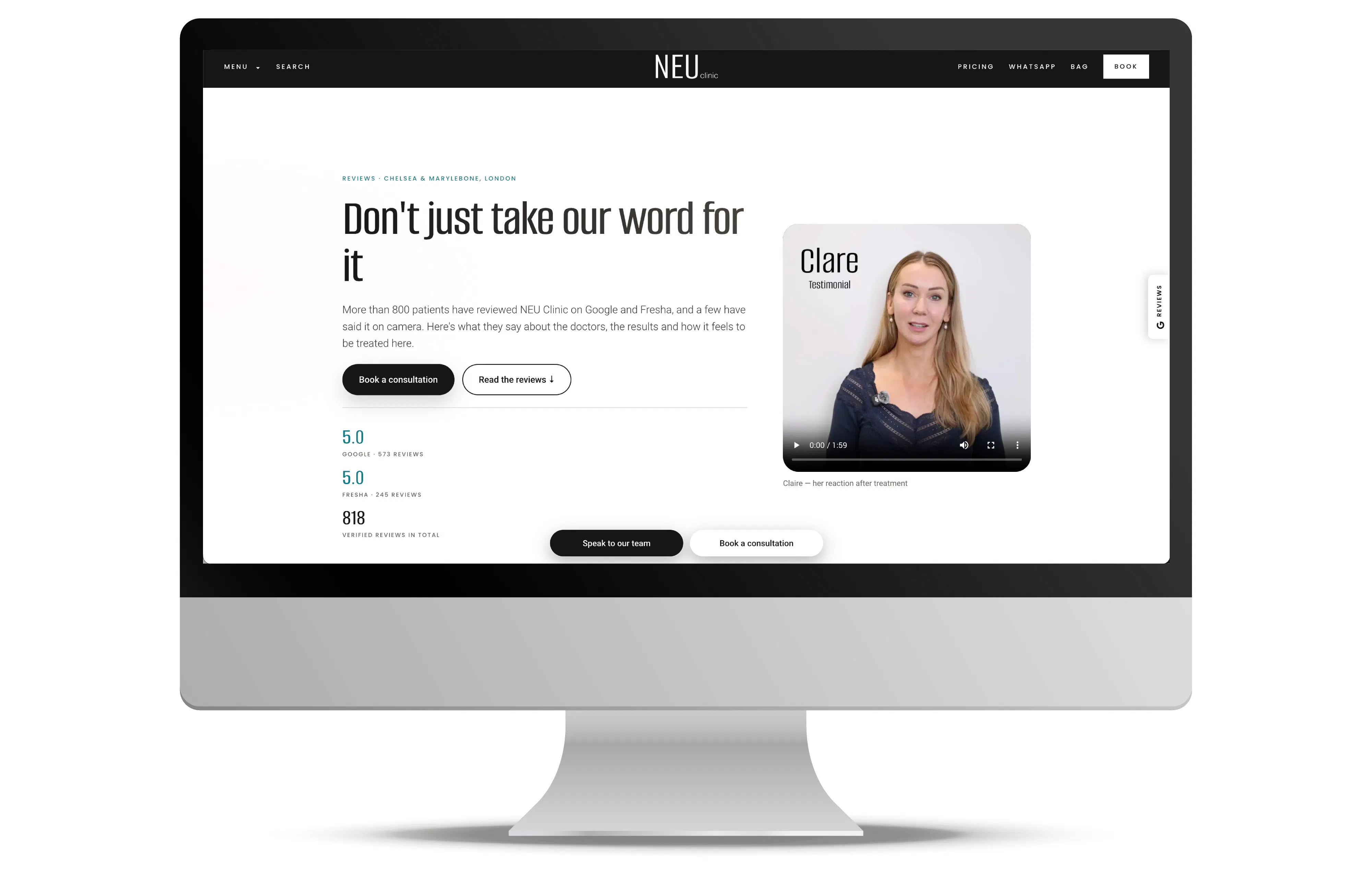
Where the clinic differs from the traditional reviews showcase, is that they have patient videos sitting above the written reviews, which makes the page far more engaging and relatable than text alone.
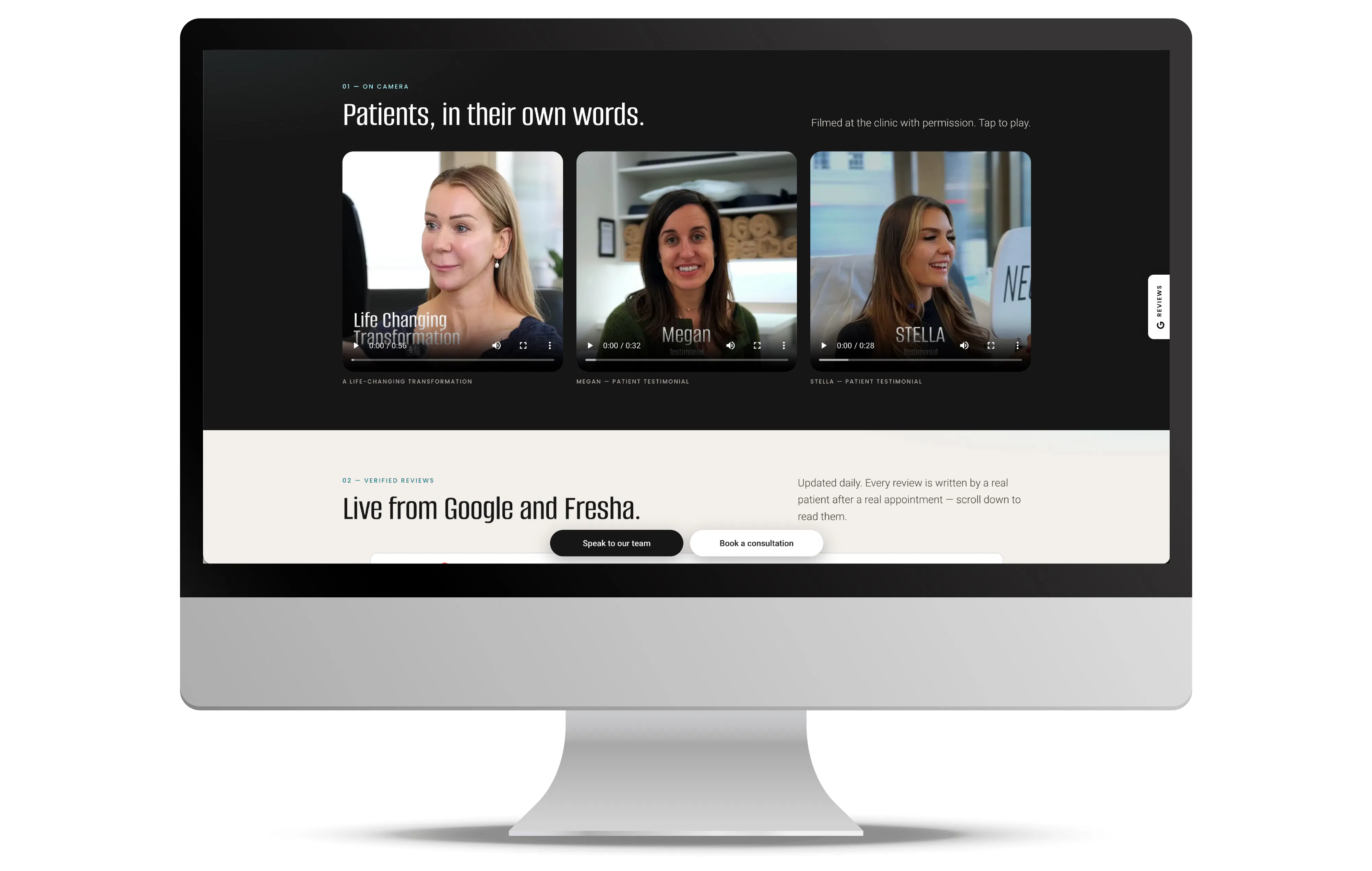
Watching a real patient talk openly about how nervous they felt beforehand, and how natural the result looks in motion, gives a prospect reassurance that a written quote struggles to match. Seeing someone like yourself speak comfortably about their experience takes a lot of the hesitation out of booking that first consultation.
For clinic owners: Ask for reviews that name the practitioner and the treatment, then republish them on a page of your own with the platform and date beside each one. Reply to every review on the platform where it was posted and - if you can - capture patient review videos for your website (and they can be repurposed and shared across your social channels).
Checkpoint 3: Instagram and TikTok
Social is often the quickest checkpoint to fix, and your profile bio is the fastest win of all.
When a prospect taps through to your Instagram or TikTok, they give you a few seconds to confirm you offer what they are looking for. Too many clinic profiles hide behind vague lines like 'aesthetics and wellbeing' that leave visitors guessing.
Peachy, the New York injectables studio group, gets straight to the point in its Instagram bio.
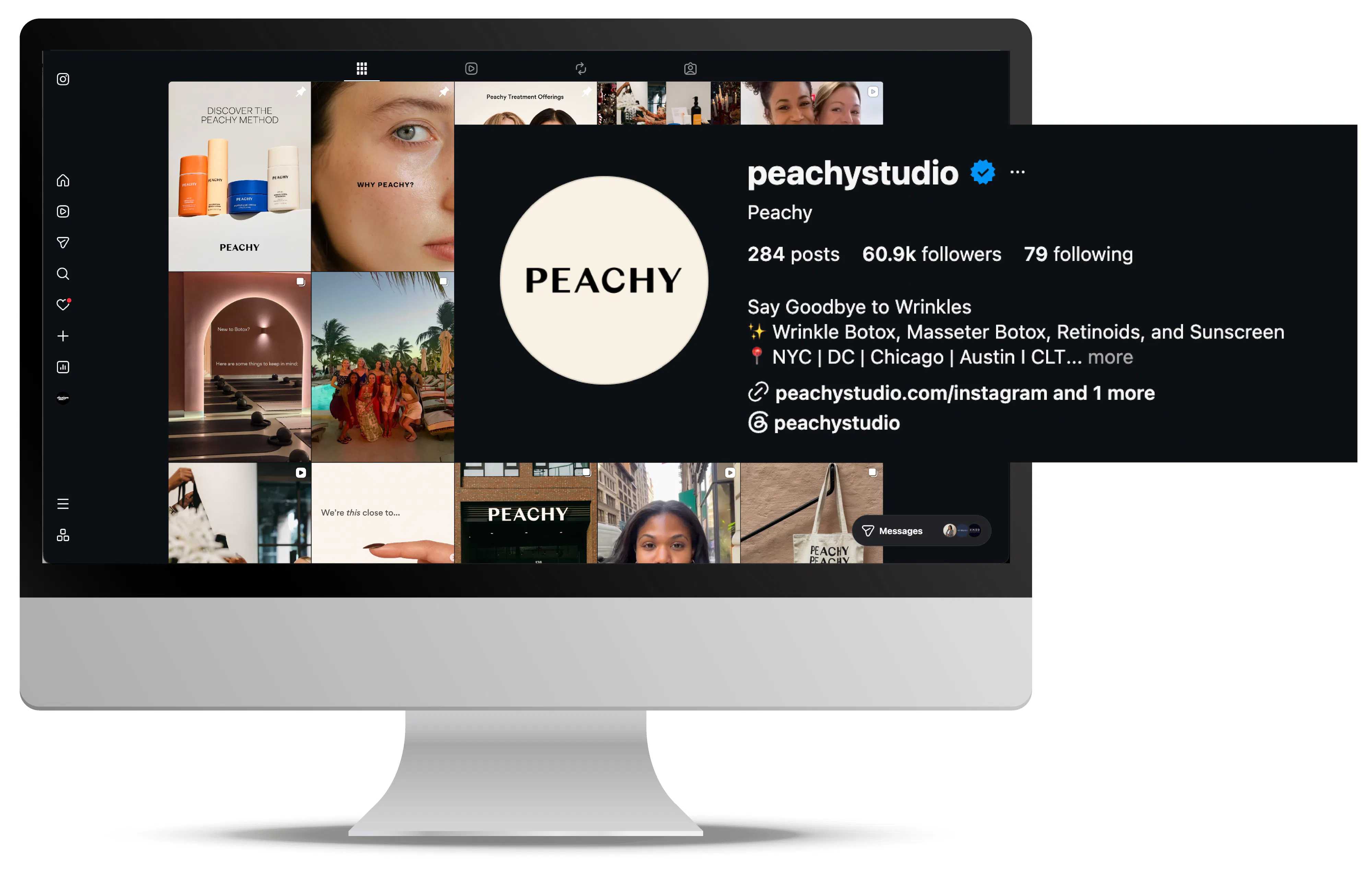
Right at the top, it spells out the exact treatments it specialises in, from wrinkle and masseter Botox to retinoids and sunscreen, with its locations listed underneath. Within seconds, a visitor knows what the clinic does and where to find it, without having to scroll through the grid or click through to a website.
For clinic owners: This is a five-minute fix. Read your Instagram and TikTok bios as a first-time visitor, replace vague slogans with the specific treatments you want to be known for (using the wording UK advertising rules allow), and put your clinic location clearly beside them.
Checkpoint 4: The before and after case study
A gallery shows what a clinic can do.
A good one also says how long it took, who did it and what the person was hoping for. Without that context, a striking image invites questions about editing.
McKeown Medical, a doctor-led clinic on Bath Street in Glasgow, has built a patient gallery that reads as a series of short case studies. Visitors can filter by area of concern and by treatment type, including injectables, laser, skin tightening and surgery. Each tile uses a consistent studio photograph, a short note on what the patient wanted, and a link through to a dedicated case page.
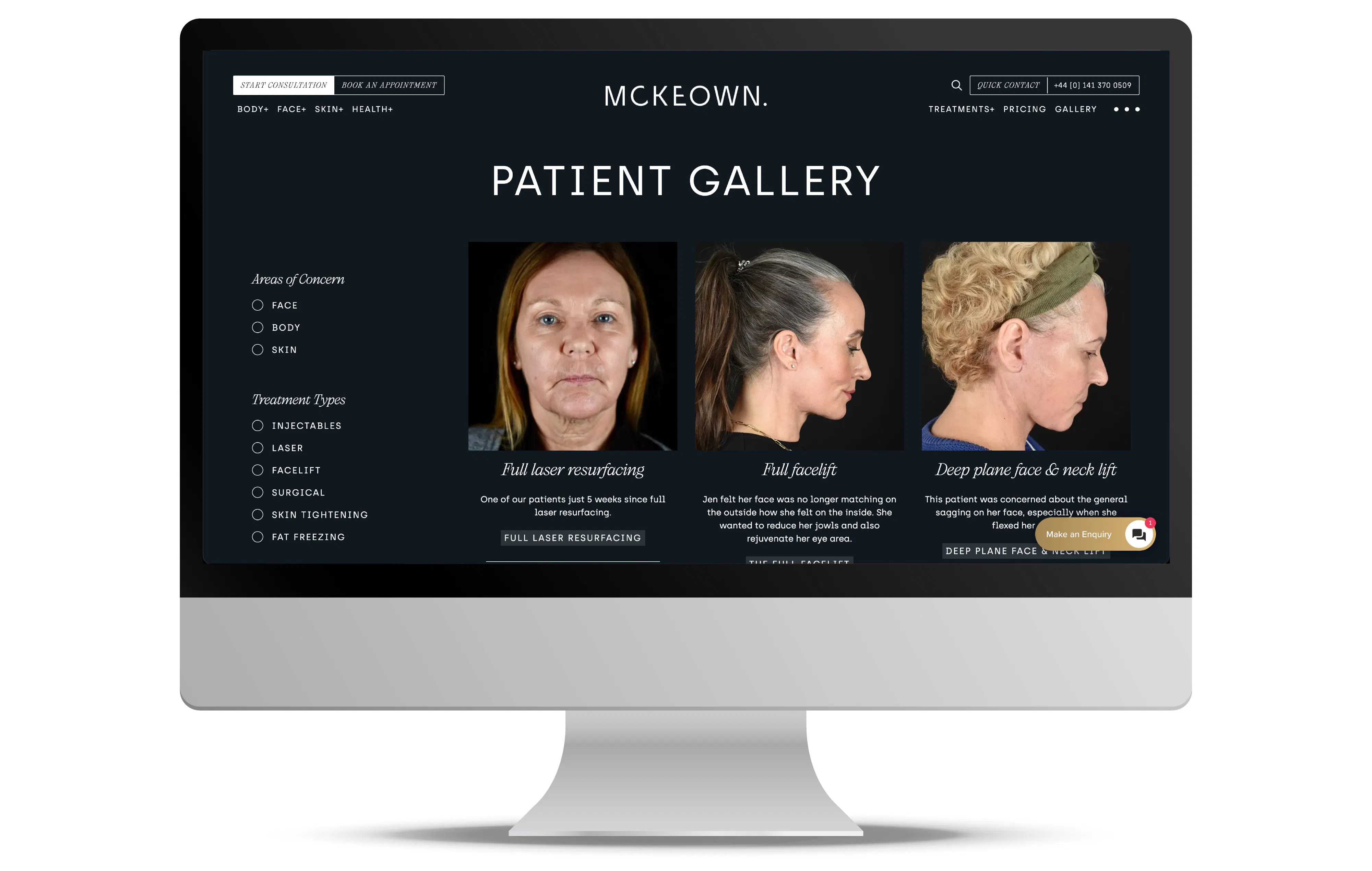
The chin and jawline filler patient case study opens with a swipe comparison, explains that reduced chin projection was affecting the lower face and neck, and states that the photographs were taken immediately after treatment. The full laser resurfacing patient case study follows the same pattern and dates the result to three months after the procedure.
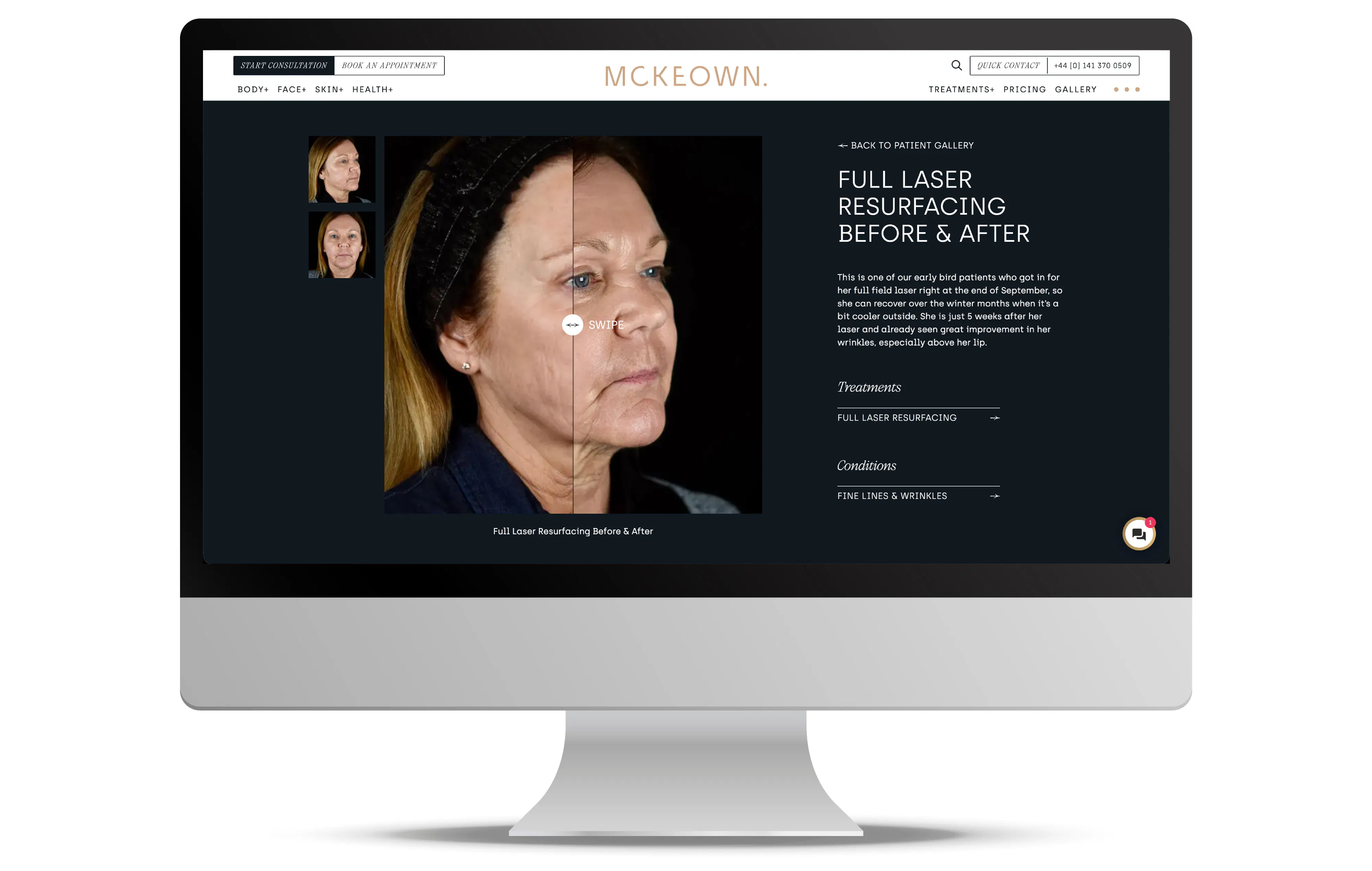
Lighting and camera angles stay consistent from one case to the next, which makes the results easier to compare.
Giving a prospective patient this level of detail does two jobs at once. It shows how thorough and considered the clinical team is in its assessment and follow-up, and it builds much deeper trust because the reader can see and read the finer details of what a realistic outcome looks like before they ever step through the door.
For clinic owners: Give every patient result a short case study that names the concern, the treatment, the timescale and, where you can, outline the practitioner and the number of sessions. Keep the lighting and angles consistent, and put your patient stories on a dedicated page of its own.
Checkpoint 5: Practitioner credentials
This is the checkpoint the regulation story puts under the brightest light. Prospects want to know who will treat them, what they are registered as and how long they have been doing it.
Most clinic websites answer that with a standard headshot and a short paragraph of letters after a name. The clinics that earn trust faster do something different, and they give people far more to go on.
The Lovely Clinic in Knightsbridge puts personality straight onto the page. Rather than leaving visitors with a still photograph and a written CV, founder Dr Sarah Tonks greets them with a short video introducing herself.
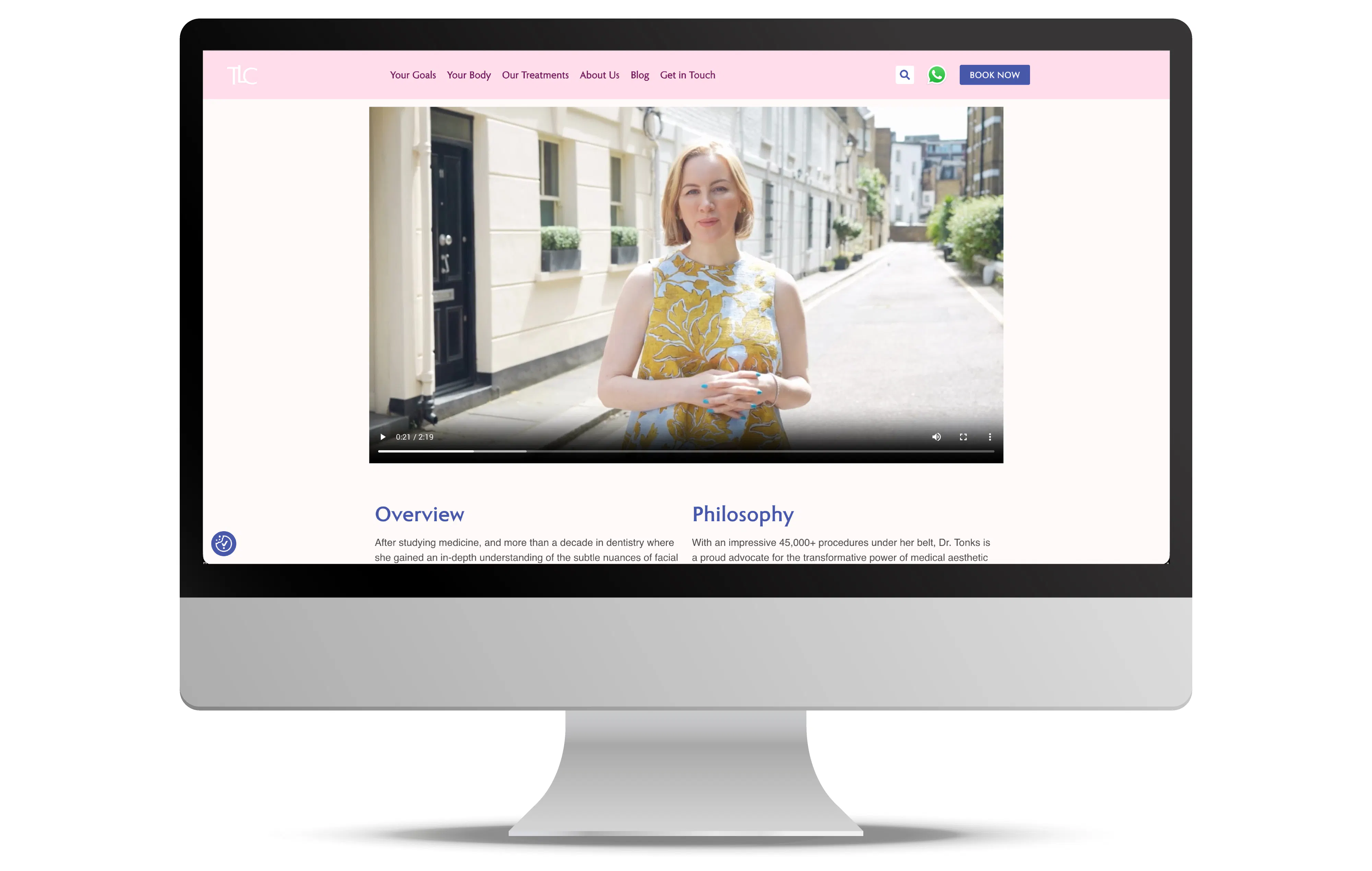
Hearing how a doctor speaks, and seeing how they come across, builds a human connection long before a consultation is booked. Her page backs that up with her full list of medical and dental qualifications, her philosophy on patient care and a few personal details that make her feel approachable.
Montrose London in Belgravia takes a more traditional route with its photography, then opens up the detail in the writing. Its team hub publishes GMC registration numbers right beside the founders' portraits, and the individual profiles go much deeper than a standard biography.
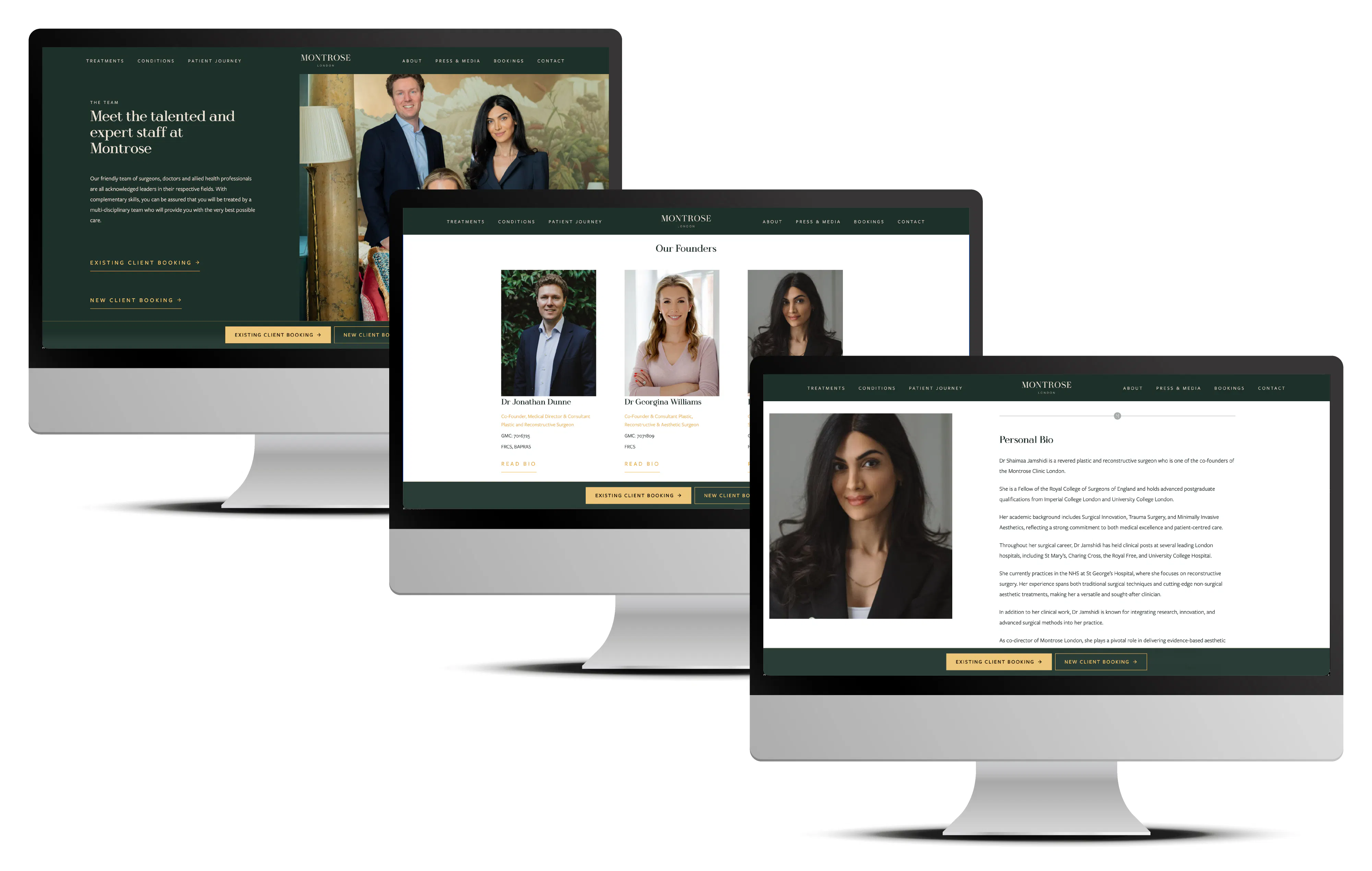
Visitors can read about fellowships in Melbourne, Boston and Stockholm alongside Dr Jonathan Dunne's charity work with the Malawi Burns Trust, giving a prospect a clear sense of both clinical standing and personal values.
For clinic owners: Treat every practitioner page as an introduction to a real person. Pair verifiable registrations and training with a short video or a fuller written profile that shows how your team thinks, what they care about and why patients are in safe hands.
What these clinics have in common
These clinics differ in size, country and price point, from a Mayfair practice with a 3D scanner to a US group built around one treatment at a flat fee. What they share is a decision to go further than a star rating, a thin gallery or a short CV. They have given patient feedback, results and the people behind the clinic more space on their website, and more detail when you get there.
That is strategic brand work.
The positioning decides what you want to be known for.
The identity makes it recognisable on a phone screen at midnight.
The website gives it a home, and the content supplies the proof, from review hubs and patient case studies and practitioner pages.
Where those pieces are designed together, the checkpoints reinforce each other. Where they are bought separately, the gaps between them are where prospects lose confidence.
In Known But Not Chosen we argued that awareness gets you noticed and preference gets you picked.
Trust lets a prospect act on that preference without second thoughts.
A trust self-check for clinic owners
Run through these with a colleague or a friend who has never heard of you.
- If you ask an AI assistant about your clinic, does it get your name, location, treatments and practitioners right, and can it point to an independent source that says the same thing?
- Do you have a reviews page of your own, with dated comments that name the practitioner and the treatment, and do you reply to reviews on the platforms where they were posted?
- Does your Instagram or TikTok bio state the specific treatments you specialise in, and the location of the clinic, clearly enough for a first-time visitor?
- Does your before and after gallery work as a set of short case studies, with consistent lighting and angles, and a note on the concern, the treatment and the timescale?
- Does each practitioner have a page that introduces them as a person, through a short video or a fuller written profile, and can a visitor also check their registration and qualifications?
If more than two of those are a no, there are shortlist places you are losing without ever hearing about them.
Start the conversation
At Designmc, we work with clinic owners as strategic consultants, looking at the trust elements of the business and finding practical ways to expand them, so patient stories, results and feedback are easier for a prospect to find and to believe.
We are a branding-led, full-service agency, and medical aesthetics is our lead sector. The work covers positioning, identity, websites and marketing as one joined-up piece, starting with a look at your clinic the way a prospective client does, checkpoint by checkpoint.
If you would like to discuss these strategies and how to put them into practice, get in touch with the team and we can start the conversation.
Email hello@designmc.org or call 01926 754038.
LET’S TALK
Looking to evolve your brand, transform your website, strengthen your marketing or build smarter digital infrastructure around your business? Drop us an email at hello@designmc.org or give us a call direct on 01926 754038 for an informal chat.

